
Most of My Client’s Don’t Know About Their Hymen
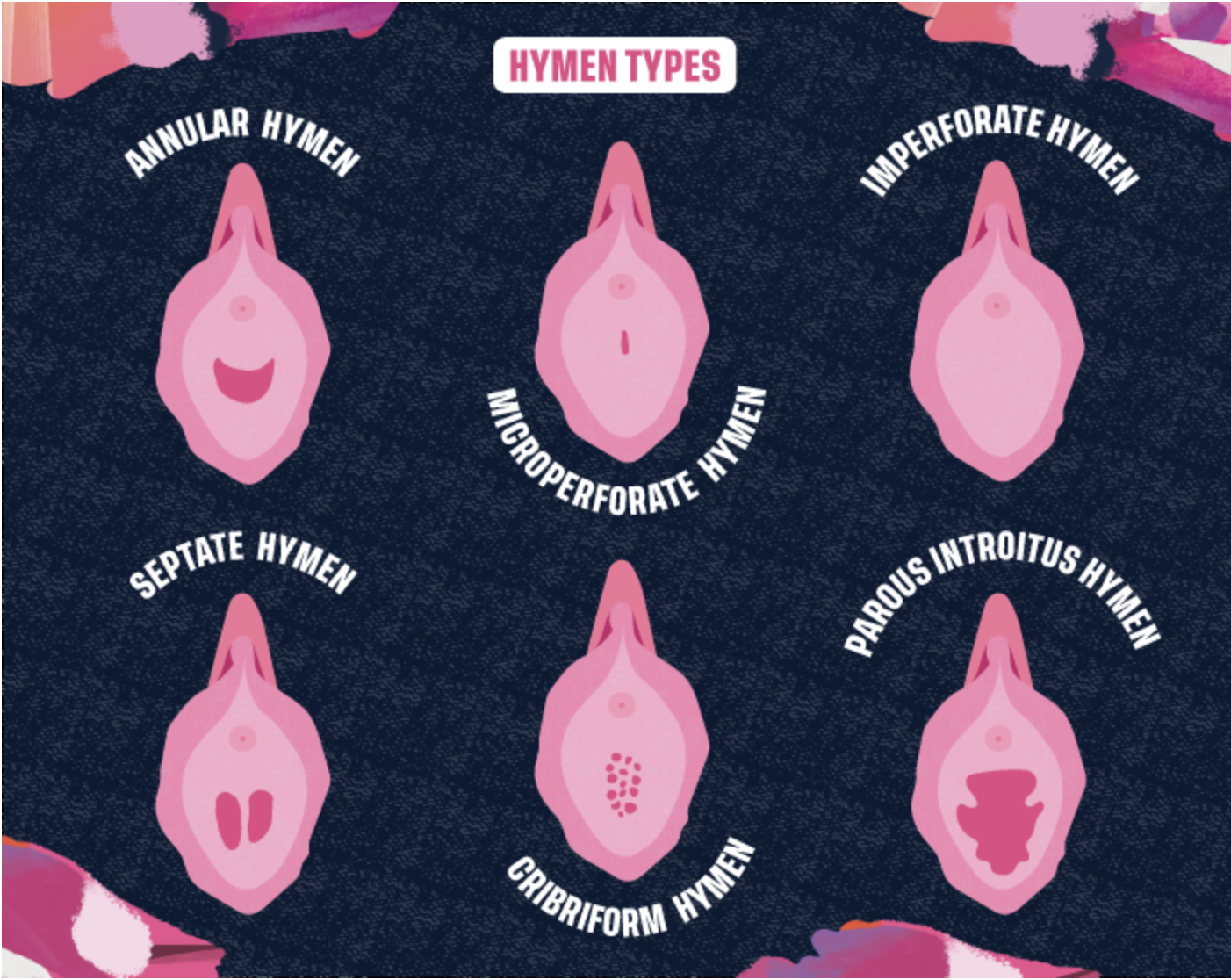
Borrowed from lovelibra.com a drawing of 6 different types of hymens.
The Hymen: What Is it?
The hymen is a thin, stretchy piece of tissue found at the entrance of the vagina — and it’s something that usually develops before birth, not later in life.
Before Birth
During fetal development, the hymen forms as part of the vagina’s natural structure. It isn’t meant to fully seal the vaginal opening. Instead, it typically appears as a small rim, crescent, or ring of tissue, leaving space for natural vaginal discharge.
Every hymen is different. Some are thicker, thinner, more elastic, or shaped differently — and some people are born with very little hymenal tissue or none at all. All of these variations are completely normal.
After Birth and Through Childhood
After birth, the hymen doesn’t have a known medical function, though it may offer minor protection in infancy. As a child grows, the tissue naturally changes. Normal activities like crawling, playing, or sports can stretch it slightly over time.
Puberty and Beyond
Hormonal changes during puberty make the hymen more elastic. As the body continues to develop, it may stretch or change shape naturally — with or without pain or bleeding. For many people, these changes happen gradually and go unnoticed.
Importantly, the hymen is not a marker of sexual activity. These original stories are a violent bi-product of Purity and R/pe Culture. Its appearance can’t reliably indicate whether someone has had sex, and medical professionals don’t use it for that purpose.
Before a Vaginal Birth and After
The vaginal opening stretches often up to 2.5 to 3.5x its resting length during childbirth. This may result in some tissues tearing, or the hymenal ring tearing. Especially in the first 3-6 months of healing, the vaginal opening may look a bit wider, and you may be able to see further into your vaginal canal. This is often the first time, people with vaginas are able to look further into the canal. Not knowing what you are looking at could bring up some confusion and worry. Are my organs falling out? Is it supposed to look like that? What’s happening to my body? If you have had worries like these— know you are not alone. It’s very common to have this experience since many Americans are not taught accurate, in-depth anatomy and sex education.
Regarding changes to your anatomy following childbirth, your local Pelvic PT, Midwife, or OBGYN can answer them for you. You do not need to worry in silence for 6 weeks— book an appointment sooner to learn more about your body.
In these situations, I typically teach my client’s about their hymen, point it out, and talk about the change in perspective, now that the top and bottom of the vaginal wall are more visible.
The Bottom Line
The hymen is simply a small part of anatomy that forms before birth and evolves naturally after birth and changes again after a vaginal birth. It looks different for everyone, changes over time, and doesn’t define health, sexuality, or personal experience.